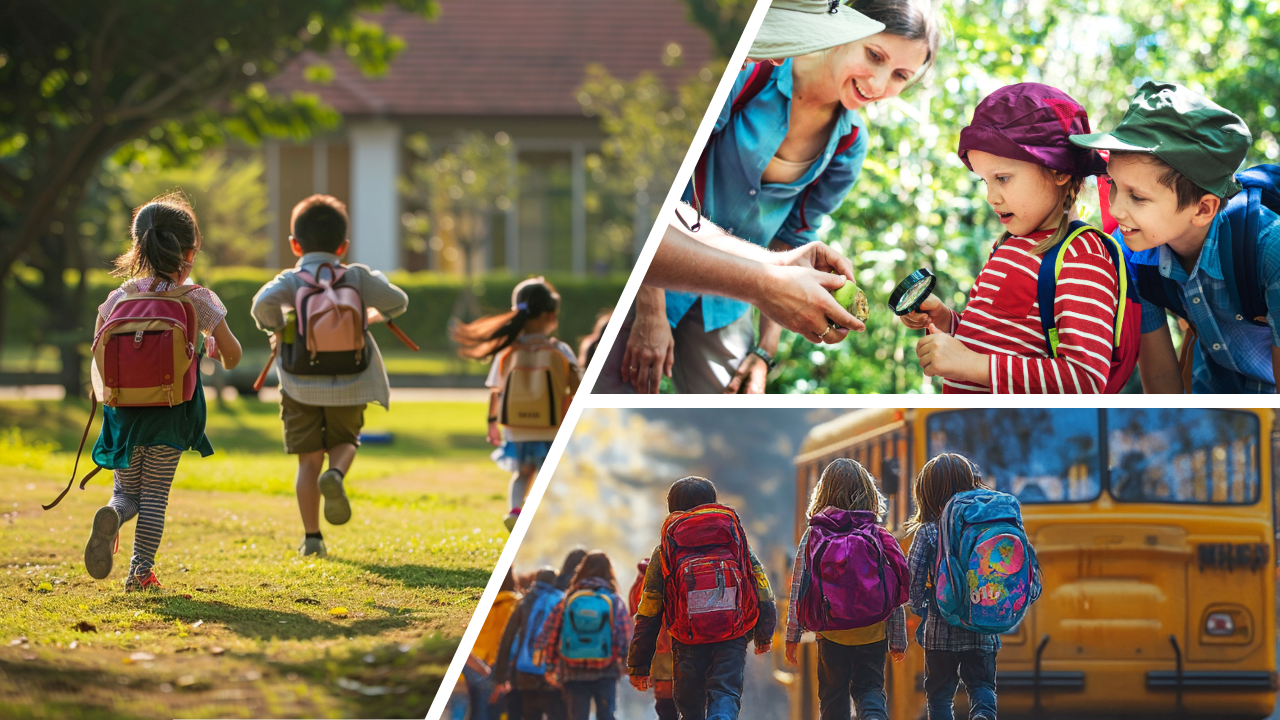
Beyond the Classroom: Why Field Trips Matter So Much

Every child is curious in their own ways. They learn by observing, asking questions, exploring new places, and experiencing the world around them. While classrooms provide the foundation for learning, educational outings complement them with valuable life lessons.
We firmly believe that learning should extend beyond textbooks. This is why field trips matter so much to the kids. Educational outings help children connect classroom concepts with real-life experiences, making learning more interesting, meaningful, and memorable. Whether it's a visit to a museum, a nature park, or a community space, every excursion becomes an opportunity to discover something new.
Why are field trips important for children?
Real-life experiences teach you more than books. Children understand concepts better when they experience them firsthand. Reading about plants is one thing; walking through a botanical garden and observing different species is another. Similarly, visiting a science museum or historical site transforms abstract lessons into tangible experiences.
Field trips encourage children to observe, question, and participate actively rather than simply receive information. This hands-on approach strengthens understanding while making learning enjoyable.
Advantages of educational outings for prep learners
Enhances Learning Experience
Outdoor field trips provide young children with real-life situations that relate the subjects taught in class to the real world.
Builds Confidence
Experiencing new situations enables young children to develop self-confidence by interacting with people, following instructions, making observations, and engaging in other activities.
Improves Communication & Social Interaction
Journeys and field trips enhance children's cooperation and ability to communicate effectively and as a team. Children get the chance to practice listening and sharing responsibilities.
Encourages Curiosity & Discovery
Field trips allow prep kids to inquire further into subjects beyond those taught in class. A simple trip to a museum may create an interest in science or history in a child.
Supports Holistic Development
These educational trips support a child's holistic development by nurturing cognitive, social, and emotional skills, as well as creative abilities, observation, and problem-solving.
More than just an educational outing
For children, educational field trips are exciting adventures. They create lasting memories, experience real-life monuments, strengthen friendships, and make learning something they genuinely look forward to. These shared experiences often become the stories children carry with them long after the school year ends.
For parents, they offer reassurance that learning is not limited to worksheets and classrooms but is designed to prepare children for the real world with confidence and curiosity.
The Blue Bells Preparatory School approach
At Blue Bells Preparatory School, an educational trip is thoughtfully planned with a clear learning objective. Our educational visits complement classroom teaching while ensuring children remain safe, engaged, and encouraged to explore.
By creating opportunities for children to experience, observe, and interact with the world around them, we help them develop essential life skills alongside academic understanding. It is our way of making learning joyful, experiential, and truly holistic.
Conclusion
Modern-day education has much more to offer; it’s about how much a school offers and how kids embrace it. They inspire curiosity, strengthen understanding, and help children develop confidence, communication skills, and a broader perspective on the world.
Every learning experience should prepare children not just for the next class, but for life itself. This is where these exclusive educational trips play a significant role in a kid's holistic development. Because when children learn beyond the classroom, they discover possibilities that stay with them forever.